M&M 2024
We look forward to meeting you at M&M 2024 in Cleveland, Ohio, USA from July 29th to August 1st, 2024.
The TESCAN Global Team is excited to meet you at BOOTH 521 during M&M 2024 in Cleveland, Ohio. Our full list of scientific talks, vendor tutorials, and demo opportunities are listed below. Please make sure to register in advance for our in-booth activities, space is limited!
Opportunities to learn and experience TESCAN during M&M 2024 include:
- New, AI-assisted TEM lamella prep automation including automated lift-out;
- New, low kV lamella polishing capabilities;
-
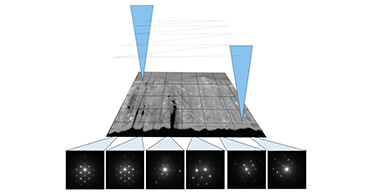
TESCAN TENSOR 4D-STEM. This cutting-edge technology is specifically designed to cater to the needs of researchers and professionals engaged in multimodal nano-characterization applications;
-
TESCAN SPECTRAL CT. For the first time in a commercial micro-CT system, we can acquire chemical data, such as identification of precious metals for mining and recycling, differentiate between different polymers in engineered samples, or optimize contrast in biological samples;
-
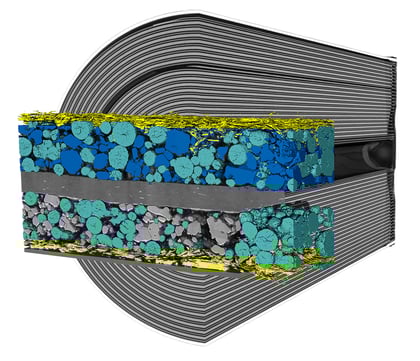
Learn about our Battery Research Analytical Workflow, where our optimized TESCAN FIB-SEM solution for lithium-ion battery characterization. Discover how our unique combination of high-current FIB, field-free UHR SEM, and integrated ToF-SIMS can revolutionize your battery research, enabling you to make significant advancements in the field;
-
Experience the Power of Plasma FIB-SEM and the Innovative TESCAN Large Volume Workflow Master IC Packaging Failure Analysis with TESCAN Solutions;
- Engage in a discussion with our Life Sciences experts, who will be available to explore the realms of 2D and 3D characterization of biological samples. Learn about groundbreaking techniques such as plasma FIB for overcoming Cryo-ET sample preparation bottlenecks, and ultra-fast cryo on-grid lamella preparation and lift-out from challenging samples.
Don't miss out on this unparalleled opportunity to witness the forefront of microscopy technology and stay at the cutting edge of scientific advancements.
Register for a Demo
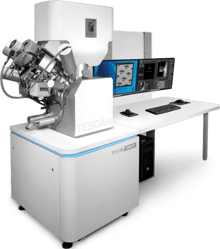
NEW! TESCAN AMBER
Versatile nanoanalytical FIB-SEM to expand your materials research capabilities
TESCAN AMBER
For demo bookings please contact our booth reception. We will try to accommodate your needs.
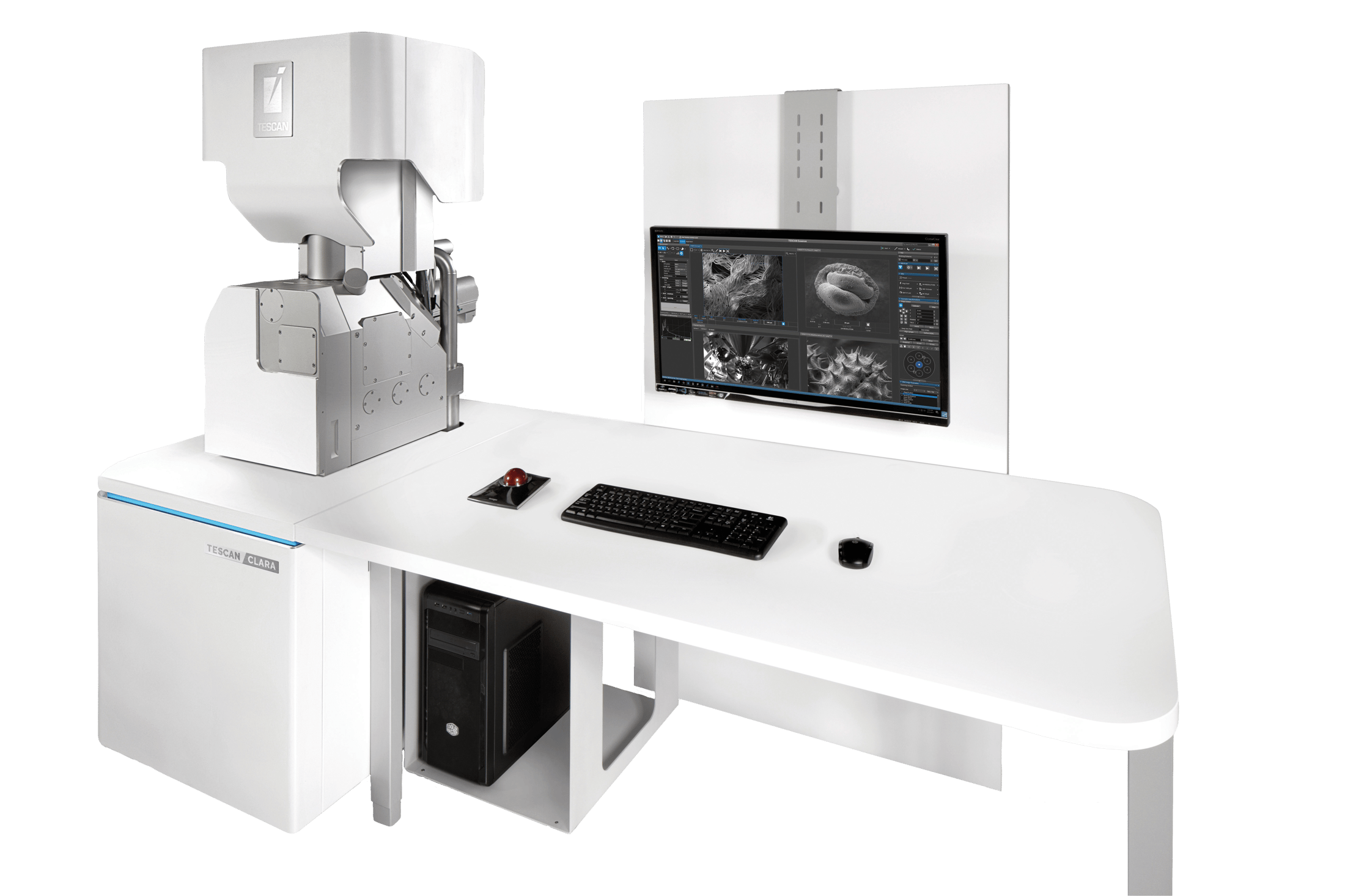
TESCAN CLARA
UHR SEM for fast, accurate, and comprehensive nanoscale surface analysis of any material
TESCAN CLARA
For demo bookings please contact our booth reception. We will try to accommodate your needs.
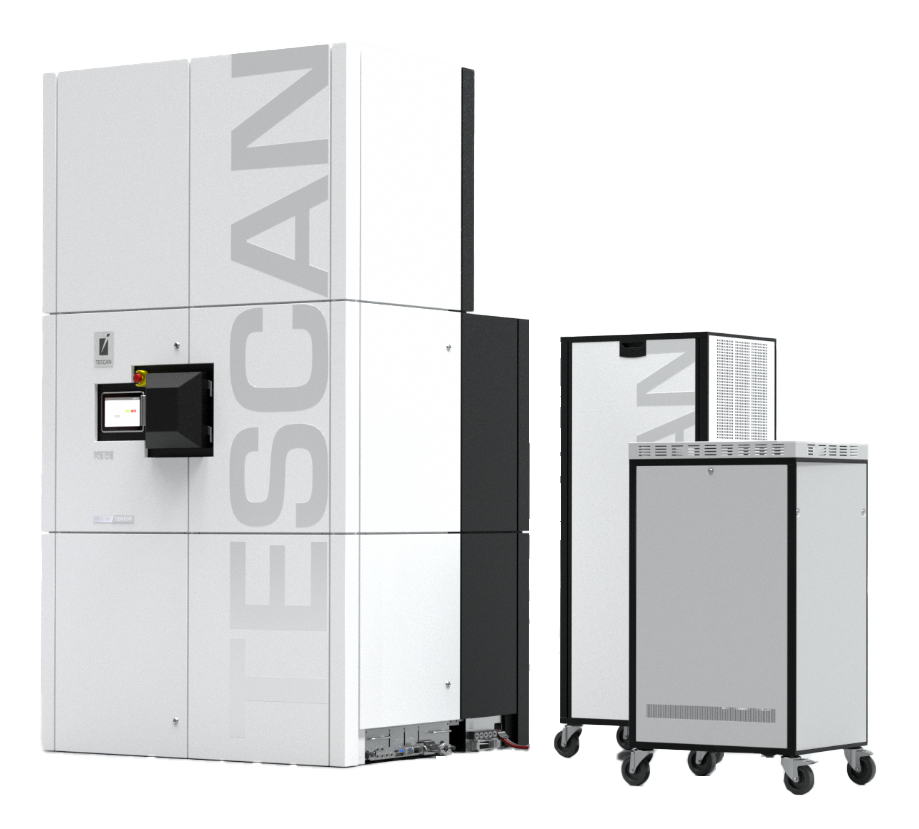
TESCAN TENSOR
The first near-UHV 4D-STEM that is Integrated, Precession-Assisted, and Analytical
TESCAN TENSOR
For demo bookings please contact our booth reception. We will try to accommodate your needs.
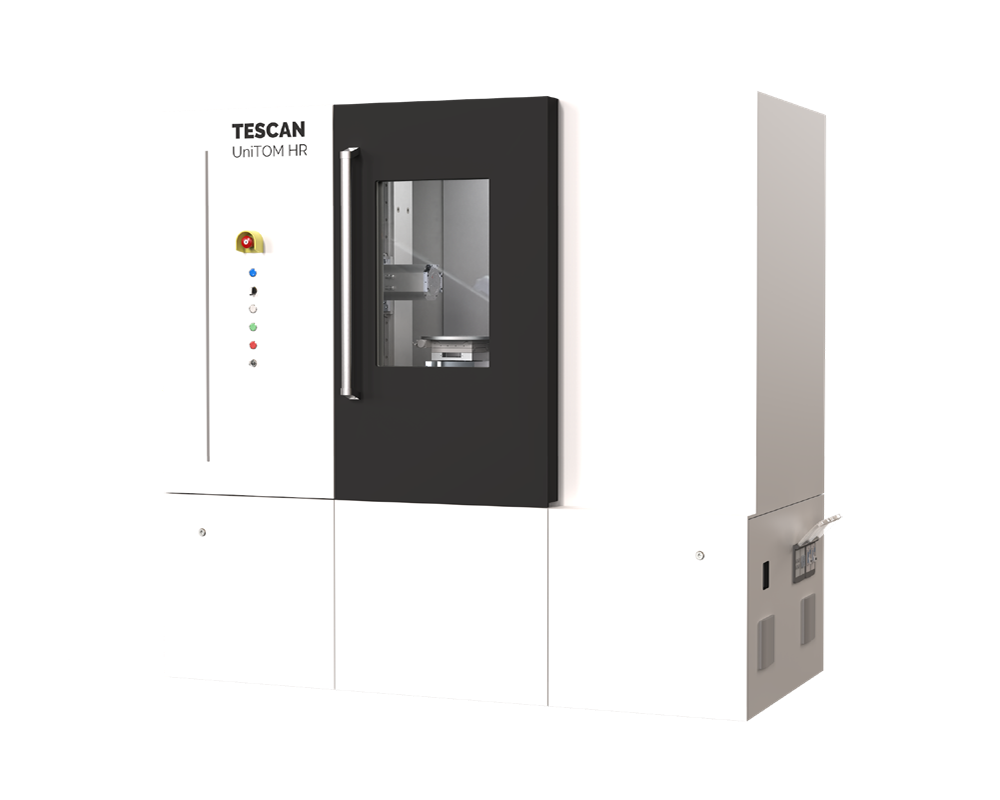
TESCAN Micro-CT
Get the full picture, layer by layer. Your nondestructive, immediate truth via intuitive tools for 3D and 4D data processing.
Micro-CT
For demo bookings please contact our booth reception. We will try to accommodate your needs.
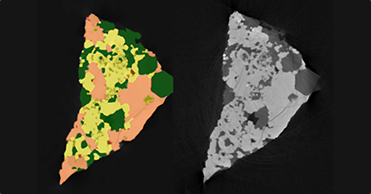
Spectral micro-CT imaging of minerals: retrieving atomic information and density maps
Micro-CT is a unique technology to non-destructively investigate the internal structure of samples, spanning a range from centimeter to micrometer scale. However, when it comes to material identification, the technology has some inherent limitations. The contrast observed within a micro-CT scan arises from a multitude of factors. The attenuation coefficient of a material is influenced not only by its atomic number and density but also by additional variables such as X-ray energy, the X-ray spectrum, and the characteristics of the employed detector. These diverse factors collectively contribute to the observed contrast, making the process of material identification in micro-CT scans a nuanced and multifaceted endeavor. By using a spectral detector, not only the attenuated intensity of the X-ray beam can be measured, but the energy spectrum of the X-ray beam is captured when it passes through a sample. This capability facilitates the segregation of information relating to both the atomic number and density within the spectral scan.
A contaminated soil sample was into a 7 cm diameter container and scanned on a TESCAN UniTOM XL SPECTRAL using both traditional attenuation-based tomography and spectral tomography which allows to measure the entire energy spectrum between 20 and 160 keV of the X-ray beam. The spectral data was reconstructed and analyzed using the TESCAN Spectral suite, which enabled to extract spectra and analyze K-edge information from dense mineral phases in the sample and generate maps of the atomic information (Zeff) and the density in the soil.
In this work we show how spectral micro-CT can improve material identification for porous geological material like soil. The soil was contaminated with heavy metals and the spectral K-edge imaging was used to analyze the distribution lead in the soil. This is illustrated in figure 1, where the spectral signature of 2 dense grains is shown. The presence of the K-edge of Pb in one of the spectra is clearly present, positively identifying lead bearing particles in the soil.
The attenuation coefficient in a micro-CT image depends on the X-ray energy, the atomic number and the density. Because we have information of all the X-ray energies between 20 and 160 keV in the spectral CT a better distinction between the atomic information (Zeff) and density can be made. In the soil we have larger granules in a finer grained matrix. In figure 2 we can see that in the Zeff map there is no difference between the granules and the matrix. While in the density map the matrix and granules can clearly be discriminated. This shows that the granules in the soil have the same chemical composition as the matrix (same Zeff) but have a clear difference in density, where the granules are far denser compared to the matrix.
Micro CT
Registration form
A New Fully Integrated Retractable 4D STEM Detector for Scanning Electron Microscopes Using Timepix3 Based Pixelated Detector

Type text here...
Micro CT
Registration form
Battery electrolyte behavior during formation and heating: new insights using high-resolution and dynamic micro-CT

In this work, we present unique results of dynamic micro-CT to study the behavior of Li-ion batteries during two important events that determine battery quality and lifetime. First, we show the interactions between different battery components during the first few charge and discharge cycles of a battery, the so-called formation cycles. How these cycles are performed has a huge impact on the lifetime, capacity and overall quality of Li-ion batteries. During these cycles the solid-electrolyte-interface (SEI), a thin layer on the surface of the electrode material, is formed.
This SEI is formed by the reaction between the electrode and the electrolyte and serves as a layer where Li+ ions can be embedded and removed during further cycling of the battery. This makes optimizing the formation cycles one of the most important research topics in battery production. Since the SEI is very thin (~100 nm), high-resolution methods such as (FIB)SEM are used to study it. Although dynamic micro-CT cannot visualize the actual SEI layer, it can be used to visualize 3D electrolyte movement in real time and study swelling and shrinking of the entire battery during cycling.
For the experiment, 15 x 25 cm large pouch cells were pressurized and mounted in the TESCAN DynaTOM, a unique micro-CT system with a rotating gantry to allow for complex in-situ experiments. Using an externally controlled potentiostat, several charge and discharge cycles were programmed with specific charging speeds, and several high-quality static (60 minutes per scan) and fast dynamic (2 minutes temporal resolution) micro-CT scans were performed at 13 predetermined intervals during the 28-hours procedure. In this work, we show results on 4D electrolyte movement, gas formation and structural dynamics in these pouch cells.
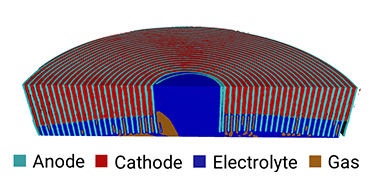
In a second experiment, the behavior of cylindrical cells under increased temperatures was observed. Elevated temperatures as low as 60 °C already have a negative effect on lifetime and will result in degradation and irreversible damage. To observe the structural effect of increased temperatures, a 26650 cell was heated up to ~60 °C using Peltier elements powered through the slip ring of the scanner’s rotation stage. In a series of dynamic and time-lapse micro-CT scans, the movement of the electrolyte in and out of the electrode layers was observed in 3D. Novel machine learning segmentation protocols enable segmentation of the different battery components, including cathode, anode, electrolyte and gas, and follow their movement over time.
Micro CT
Registration form
Precession-Assisted 4D-STEM Strain Characterization of Semiconductor Devices

The demand for characterization tools for material properties at the nanoscale is always increasing. Material functional properties can be tuned according to nanometric characteristics of the material.
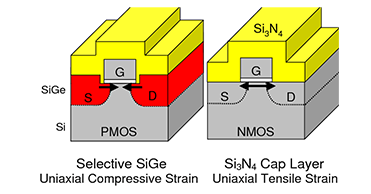
In the semiconductor industry the most relevant example of such property tuning is carrier mobility enhancement achieved via strain engineering. Modern CMOS technologies often implement compressive strain in pMOS transistors and tensile strain in nMOS transistors through different fabrication techniques as depicted schematically bellow. As the dimensions continue to decrease, nanoscale analytical techniques become more relevant.
Micro CT
Registration form
AI-Assisted TEM Lamella Prep Automation with Automated Lift-out

This demonstration will show how AI technology supports TEM lamella preparation, featuring an automated lift-out process that helps streamline specimen preparation. This technology improves consistency and reduces the need for manual intervention, making it suitable for laboratories looking to enhance their TEM workflows.
Micro CT
Registration form
Advanced Low kV Lamella Polishing Capabilities down to 100 eV
This part of the demo will focus on the capabilities of low kV lamella polishing, which can be adjusted down to 100 eV. It will illustrate how this precise control over the polishing process helps in reducing surface damage, thus preserving the quality of the TEM samples for detailed analysis.
Micro CT
Registration form
Boosting performance and productivity of multimodal analytical STEM by using 100 kV

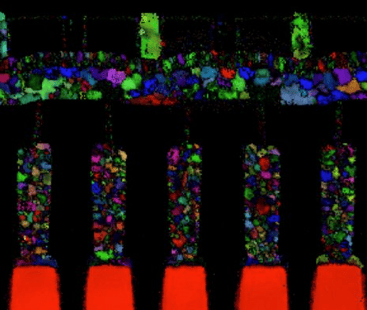
Nanoscale characterization by scanning transmission electron microscopy (STEM) is driven by ever increasing compositional and structural complexity of new and improved materials in a wide range of applications and industries. The groundbreaking new approach to multimodal analytical STEM characterization introduced with TESCAN TENSOR, including the advanced electron diffraction techniques enhanced by beam precession, makes precise analyses of morphological, chemical, and structural properties accessible to a wide range of users and scientists. The unique new design of TESCAN TENSOR has enabled advanced on-the-fly automation of system alignments and adjustments of STEM imaging, STEM analysis and 4D-STEM nanobeam settings without user intervention. The combination of 100 kV FEG electron probe with fast beam precession (72,000 Hz) and sensitive detectors (Dectris Quadro) provide interactive sample analysis and assure high quality of recorded data per electron dose. Full integration and synchronization of all microscope modules facilitate simplified workflows, which ultimately translate into fast time to data and superior productivity.
AMBER X 2
Registration form
Find Us Here
.png?width=662&height=785&name=Untitled%20(4).png)
Microscopy & Microanalysis
BOOTH 521
Huntington Convention Center
300 Lakeside Avenue
Cleveland, OH 44113
United States

July 29 - August 1, 2024
Cleveland, Ohio, USA